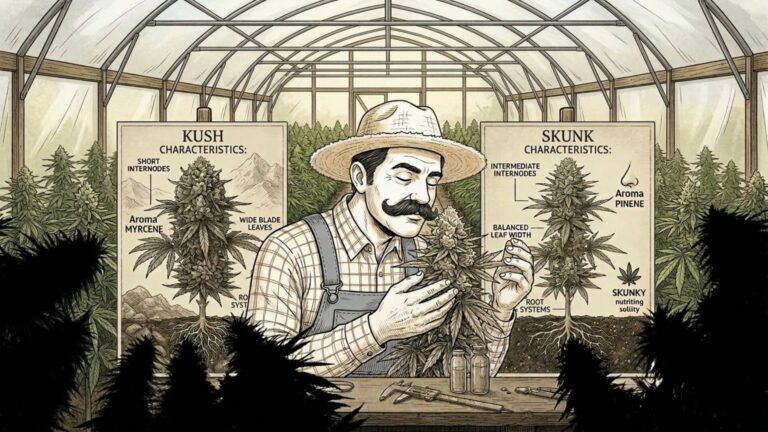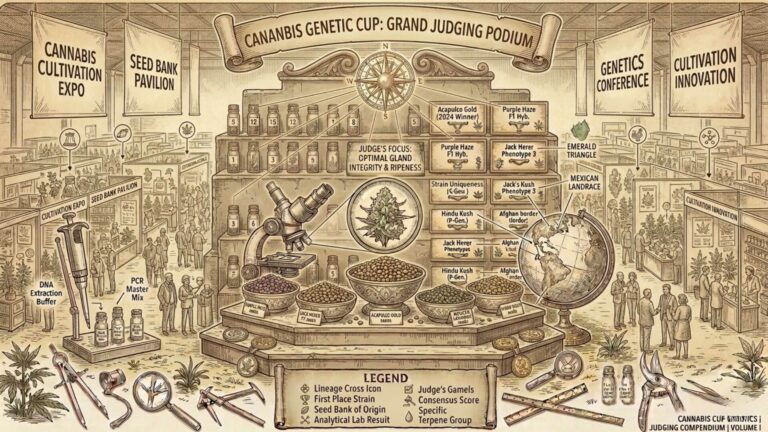

Quick answer: No single era had the best cannabis genetics, because each decade solved a different problem. The 1990s built the foundation (Super Skunk, Jack Herer), the 2000s gave us aroma and Cannabis Cup personality (Amnesia Haze, NYC Diesel), the 2010s made flavour mainstream (Original G.S.C., Gary Payton), and the 2020s are refining distinct flavour identities (Lemon Fever, La Bomba). Which one is “best” depends on whether you value stability, aroma, flavour, or breeding potential.
At a glance: the best cannabis genetics by decade
| Era | Theme | Landmark cultivars | Breeder |
|---|---|---|---|
| 1990s | The Foundation Era | Super Skunk, Jack Herer | Sensi Seeds |
| 2000s | The Cup Years | Amnesia Haze, NYC Diesel | Soma’s Sacred Seeds |
| 2010s | The Culture Shift | Original G.S.C., Gary Payton | Cookies, Cookies / Powerzzzup |
| 2020s | The Current Wave | Lemon Fever, La Bomba | Wizard Trees, Compound Genetics |
What does “best genetics” actually mean?
Before comparing decades, it helps to define the term. In plant breeding, “genetics” refers to the inherited traits a cultivar passes on to its offspring. When collectors and growers say a cultivar has great genetics, they usually mean a mix of these qualities:
- Stability: seeds from the same pack grow into plants that look and behave alike.
- Vigour and resilience: the plant grows strongly and copes well with changing conditions.
- Aroma and flavour: a distinct terpene profile that is easy to recognise.
- Breeding value: how useful the line is as a parent for new crosses.
- Influence: how many later cultivars trace back to it.
Seen through these criteria, every era below earns a place in the story.
The 1990s: The foundation era
The 1990s are often called the era of the originals. Skunk and Haze lines defined a generation of cannabis breeding, and their influence is still visible in countless modern crosses.
Super Skunk (Sensi Seeds)
Super Skunk is a cross of Skunk #1 and an Afghan line. It became a reference point for dependable, vigorous genetics, which is why it still shows up in the family trees of many later cultivars.
Jack Herer (Sensi Seeds)
Jack Herer is a 1994 Cannabis Cup-era icon, named after the well-known hemp activist. It is commonly described as a blend of Skunk, Northern Lights and Haze influences, and it remains one of the most recognisable names in cannabis history.
Why it matters: The 1990s proved that careful crossing could produce consistent, reproducible plants. Most of what came after builds on this groundwork.
The 2000s: The Cup Years
In the 2000s, Amsterdam’s cup culture went global. Cultivars were judged side by side, and breeders competed to produce big personalities and distinct aromas. Haze met Diesel, and aroma became a headline feature.
Amnesia Haze (Soma’s Sacred Seeds)
Amnesia Haze is a 2004 Cannabis Cup winner and a defining Haze-forward cultivar of the decade. It showed how much demand there was for a classic Haze character in a modern package.
NYC Diesel (Soma’s Sacred Seeds)
NYC Diesel is known for its signature grapefruit and citrus aroma, and for bringing Diesel-style genetics to a wide audience.
Why it matters: The Cup years turned aroma into a selling point and gave cultivars a public identity that breeders and collectors could follow.
The 2010s: Genetics become culture
The 2010s were the culture shift. Cookies turned cultivar names into icons, and the flavour-first era went mainstream. Names, branding and sweet, dessert-like flavour profiles became as important as the plant itself.
Original G.S.C. (Cookies)
Original G.S.C. is the California Cookies classic. It anchored a whole wave of crosses and shaped what many breeders chose to work with for years.
Gary Payton (Cookies / Powerzzzup)
Gary Payton, from 2019, is a cross of The Y and Snowman. It is a good example of how the decade blended breeder collaboration with strong branding.
Why it matters: The 2010s showed that genetics could become a cultural phenomenon, with flavour leading the conversation.
The 2020s: The current wave
The current generation is defined by new combinations, more defined flavour identities and more choice than ever.
Lemon Fever (Wizard Trees)
Lemon Fever is a cross of Gelonade and Studio 54, and it reflects the push toward sharper, more specific flavour identities.
La Bomba (Compound Genetics)
La Bomba combines Wedding Cake with Jet Fuel Gelato, bringing together two of the most influential modern flavour families.
Why it matters: Today’s breeders can draw on decades of accumulated genetics, so crosses are increasingly deliberate and specialised.
So, which era had the best genetics?
There is no objective winner, but there are useful ways to choose:
- If you value historical influence: the 1990s. Super Skunk and Jack Herer sit near the root of many family trees.
- If you value classic aroma and Cup pedigree: the 2000s. Amnesia Haze and NYC Diesel set the benchmark for distinct character.
- If you value flavour and cultural impact: the 2010s. Original G.S.C. and Gary Payton changed what the market expected.
- If you value variety and new combinations: the 2020s. Lemon Fever and La Bomba show how broad the choice has become.
Many collectors end up keeping genetics from every decade, because each tells a different part of the story.
Frequently asked questions
What are the most influential cannabis genetics of all time?
Super Skunk, Jack Herer, Amnesia Haze, NYC Diesel and Original G.S.C. are frequently cited as some of the most influential, because they appear in many later crosses and helped define their eras.
What is the difference between a strain and a cultivar?
In everyday use, the two words are often interchangeable. “Cultivar” is the more precise horticultural term for a plant variety selected and maintained through cultivation, and it is increasingly used in breeding circles.
Which cannabis cultivars won the Cannabis Cup?
Jack Herer is associated with the 1994 Cup era, and Amnesia Haze is a 2004 Cannabis Cup winner. Both are featured in this guide.
Why did flavour become so important in the 2010s?
The Cookies wave made flavour-first cultivars mainstream. Sweet, dessert-style profiles and strong branding changed what collectors and the wider market looked for.
Are newer genetics better than older ones?
Not automatically. Newer cultivars benefit from decades of breeding work, but older lines remain valuable for their stability, history and breeding value.
This article is for educational and informational purposes. Laws about cannabis seeds and cultivation vary by country and region. Always check and follow the rules where you live. Content is intended for adults only.