
Summary
- The three main cannabis growing media are soil (forgiving, flavour-friendly, beginner-appropriate), coco coir (fast growth, more control, intermediate level), and hydroponics (fastest growth, highest yield potential, highest complexity).
- Soil is the most forgiving medium: its natural buffering capacity protects against pH swings and nutrient errors that would immediately show up in coco or hydro.
- Coco coir is inert: it holds no nutrients of its own, so you control everything. This means faster response to feeding and faster growth, but also faster consequences for mistakes.
- In hydroponics, roots sit directly in oxygenated, nutrient-rich water. Growth rates can be 20–30% faster than soil, but pH and nutrient management must be precise and consistent.
- For growers in central Europe growing in limited space, apartments, small tents, soil or coco in containers is almost always the right starting point.
The Foundation of Every Grow
Before the lights, before the nutrients, before the genetics, there is the medium. The material your roots grow in determines how your plant feeds, how it responds to water, how fast it grows, and how much skill it demands from you as a grower.
Choosing the wrong medium for your experience level is one of the most common reasons new growers struggle. Choosing the right one, and understanding why, is one of the most effective things you can do before your next grow.
Here is an honest breakdown of the three main options.
Option 1: Soil
What It Is
Soil is the growing medium cannabis evolved with. A quality potting soil or cannabis-specific mix contains organic matter, mineral particles, perlite for drainage, and a living ecosystem of bacteria and fungi that break down organic nutrients into forms the plant can absorb.
Not all soil is equa
l. A pre-amended super soil, mixed with compost, worm castings, bat guano, kelp, and other organic inputs, can feed a plant through most of its life with minimal additional feeding. A basic potting soil needs regular nutrient supplementation from early vegetative growth.
The Advantages
- Buffering capacity: Soil naturally buffers pH swings and absorbs excess nutrients. Mistakes correct themselves more slowly, giving you time to catch and fix problems.
- Flavour: Many growers, and many tasting panels, believe organic soil grows produce the most complex, nuanced terpene profiles. Living soil supports microbial activity that may enhance terpene synthesis.
- Forgiveness: The most beginner-friendly medium. The margin for error is wider than any other option.
- Low equipment overhead: No pumps, reservoirs, or recirculation systems required. Pot, soil, water. That is all.
The Disadvantages
- Slower response: Because soil buffers inputs, problems show up more slowly, and corrections also take longer to take effect.
- Variable composition: Different soil brands vary significantly. A budget potting mix from a garden centre is not the same as a purpose-formulated cannabis soil.
- Pest harbour: Soil can harbour fungus gnats, root aphids, and other pests. Sterile media like coco do not have this problem.
Best For
Beginners, organic growing enthusiasts, growers who prioritise flavour complexity, and anyone who wants the most forgiving learning environment.
Option 2: Coco Coir
What It Is
Coco coir is derived from the fibrous husk of coconut shells, a byproduct of the coconut industry that was largely waste material before horticulture found a use for it. It is processed, washed, and compressed into blocks or bales that rehydrate for use as a growing medium.
Critically, coco coir is inert. Unlike soil, it contains no nutrients of its own. It is purely a physical structure for roots, holding moisture, providing air pockets, and giving roots something to grip. Every nutrient the plant receives comes from you, through your feed water.
The Advantages
- Speed: Without the buffering and slower nutrient cycling of soil, coco plants can grow 20–30% faster when managed well. More frequent, lower-strength feeding keeps roots in constant contact with nutrients.
- Control: You decide exactly what the plant receives, in what ratio, at what strength. Nothing is coming from the medium itself. This is ideal for growers who want precision.
- No soil pests: Fungus gnats and root aphids cannot establish in coco coir the way they can in soil. Sterile medium, fewer pest problems.
- Reusability: Coco can be rinsed, sterilised, and reused for multiple grows, reducing ongoing costs.
The Disadvantages
- You must feed every watering: Because coco has no nutritional content, every watering needs to include a full nutrient profile. You cannot skip feeds the way you occasionally can in soil.
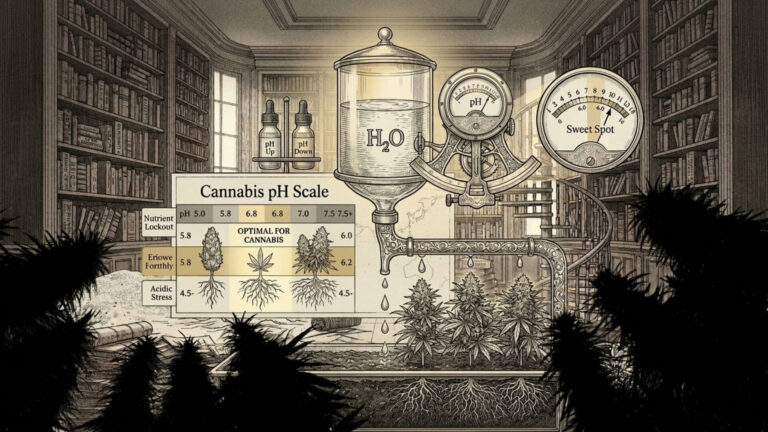
- pH management is critical: Coco has almost no buffering capacity. pH errors show up fast. A good pH meter and consistent practice are essential.
- Calcium and magnesium: Coco naturally binds calcium and magnesium ions, which means you need to supplement Cal-Mag in addition to your standard feed. Easy to manage once you know, but trips up many first-time coco growers.
Best For
Intermediate growers who want faster growth and more control than soil allows, and who are comfortable with consistent nutrient management. Coco is the most popular medium among experienced home growers in Europe.
Option 3: Hydroponics
What It Is
Hydroponics is the practice of growing plants with their roots in direct contact with a nutrient-rich water solution, no solid growing medium at all, or with a minimal inert substrate (clay pebbles, rockwool, or similar) purely for physical support.
There are several hydroponic system types: Deep Water Culture (DWC), where roots hang in an oxygenated reservoir; NFT (Nutrient Film Technique), where a thin stream of solution flows past the roots; and Ebb & Flow (Flood & Drain), where the root zone is periodically flooded and drained. Each has different characteristics, but all share the same core principle: roots in direct contact with precisely managed nutrient solution.
The Advantages
- Maximum growth rate: With oxygen-rich water, ideal nutrient ratios, and no medium resistance, cannabis plants in hydro can grow faster than in any other system. Commercial producers use hydro for this reason.
- Highest yield potential: All other variables being equal, hydro systems generally produce more per square metre than soil or coco.
- No medium to dispose of: The root zone is water. No bags of spent soil to manage.
The Disadvantages
- Precision required: pH and EC (nutrient concentration) must be monitored and adjusted daily in active systems. A power cut, a pump failure, or 24 hours of neglect can stress or kill plants that have no medium buffer at all.
- Equipment cost: Reservoirs, pumps, air stones, net pots, system frameworks, the initial investment is higher than soil or coco.
- Root zone problems escalate fast: Pythium (root rot) and other root zone pathogens spread rapidly through a shared water reservoir. Prevention through water temperature control (below 20°C) and beneficial bacteria additions is essential.
Best For
Experienced growers with a stable, controllable environment, time to monitor daily, and the experience to diagnose problems quickly. Not recommended as a first grow medium.
Comparison at a Glance
| Feature | Soil | Coco Coir | Hydroponics |
| Difficulty | Beginner | Intermediate | Advanced |
| Growth speed | Normal | Fast | Fastest |
| Yield potential | Good | Very good | Highest |
| pH tolerance | Forgiving | Moderate | Very precise |
| Equipment cost | Low | Low–Medium | Medium–High |
| Flavour potential | Highest (organic) | Very good | Good |
| Pest risk | Moderate | Low | Low |
| Error recovery | Slow but forgiving | Moderate | Fast but unforgiving |
What About Mixing Media?
A common and effective approach is to combine media. A 70% coco / 30% perlite mix gives you coco’s speed and control with improved drainage and oxygenation. Adding 10–20% worm castings to a coco base introduces some organic buffering and microbial life. Many experienced growers run their own custom mixes refined over multiple seasons.
Start with a proven base, quality soil or quality coco, and modify as you gain experience. Do not overcomplicate your first grow by experimenting with the medium and a new strain simultaneously.
The Medium Does Not Make the Grower
Every medium in this article can produce exceptional cannabis in the right hands. The worst soil grow from a skilled organic grower will outperform the most expensive hydro setup run by someone who does not understand their nutrients or their plant.
Start with what matches your experience level and your willingness to engage with the variables. Grow well in that medium. Then, when curiosity strikes, try another.
Whatever you grow in, your genetics deserve to express themselves fully. Find genetics worth growing at jonny-seeds.com.