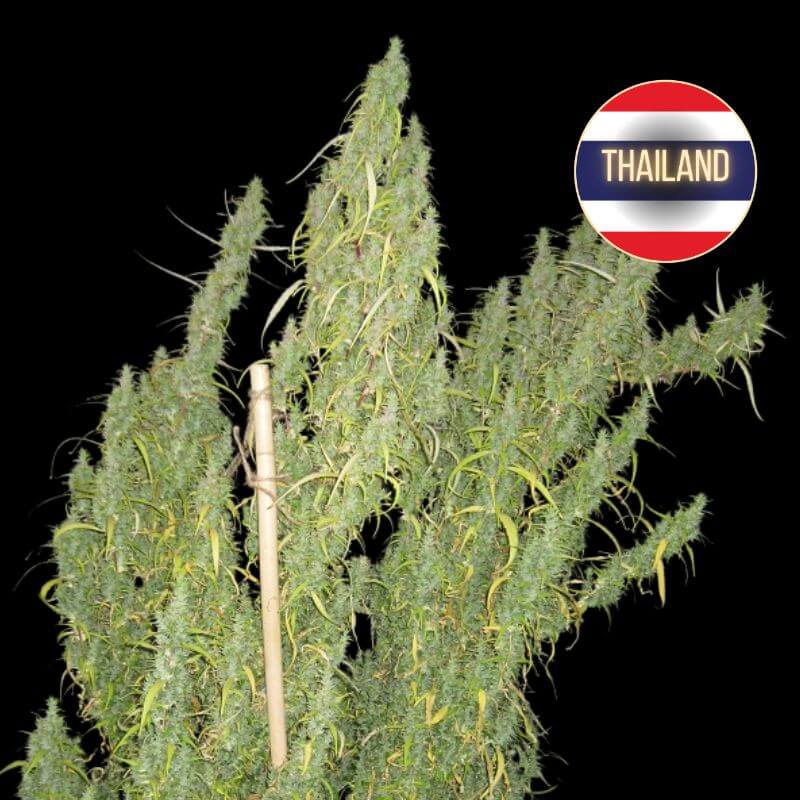
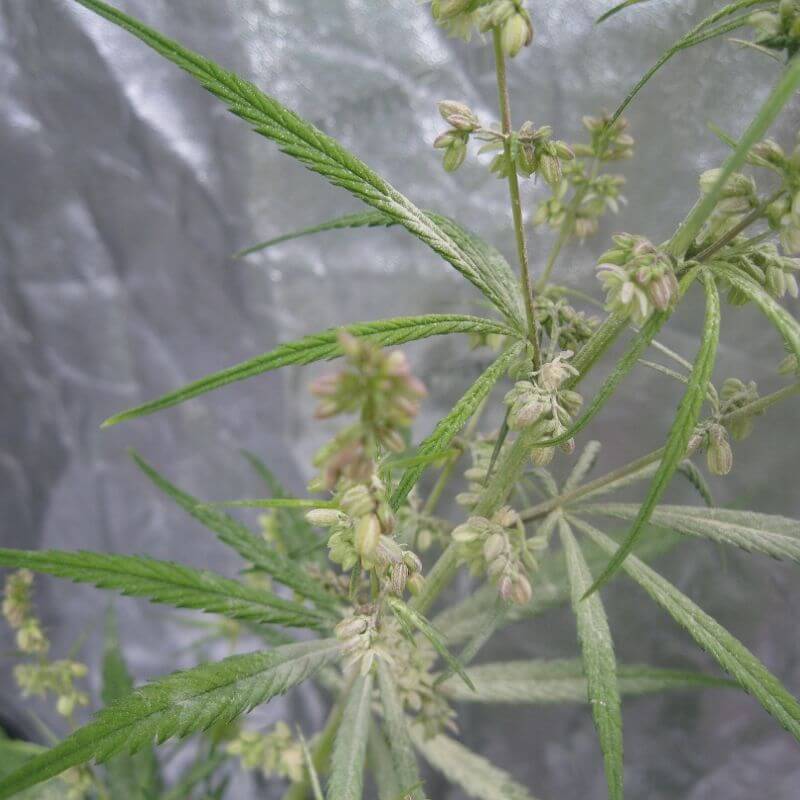
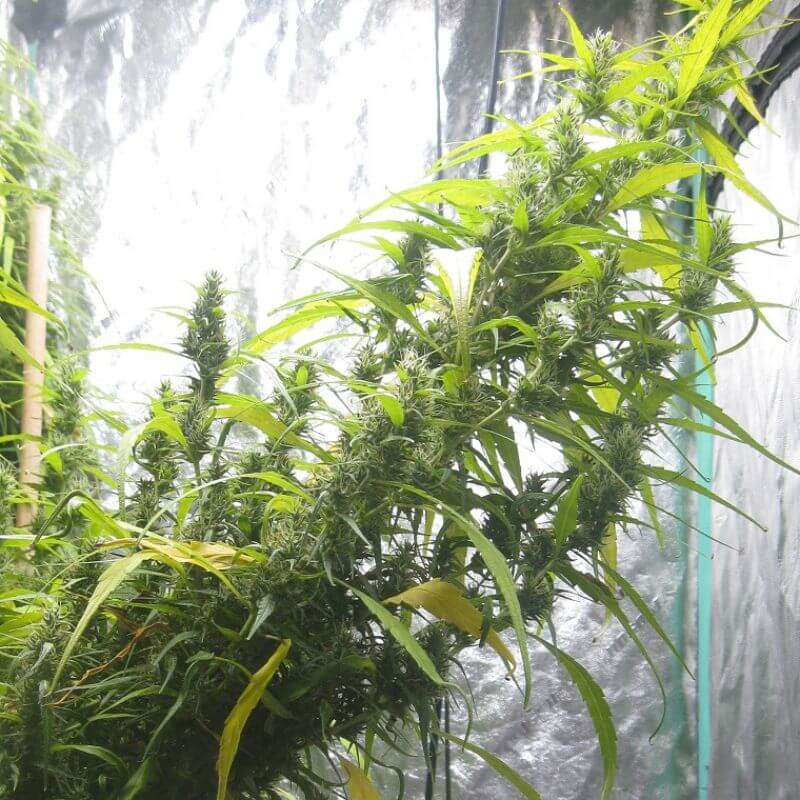
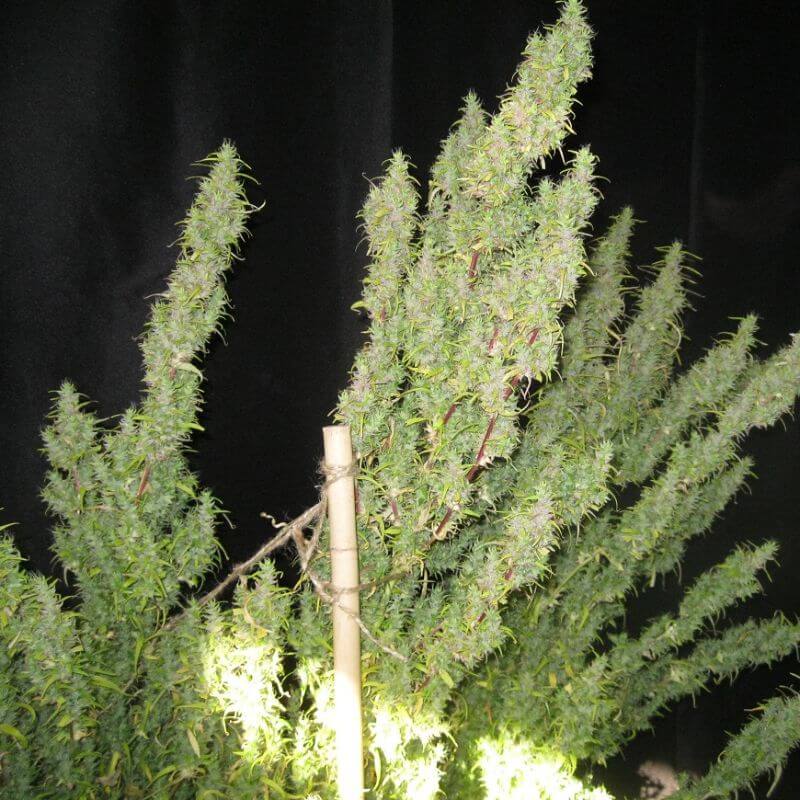
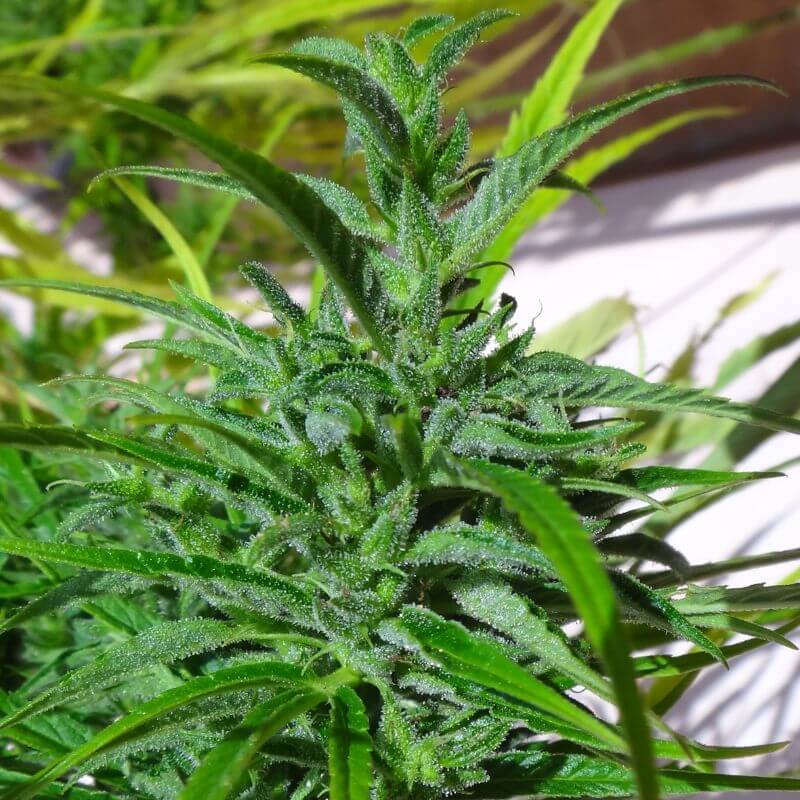
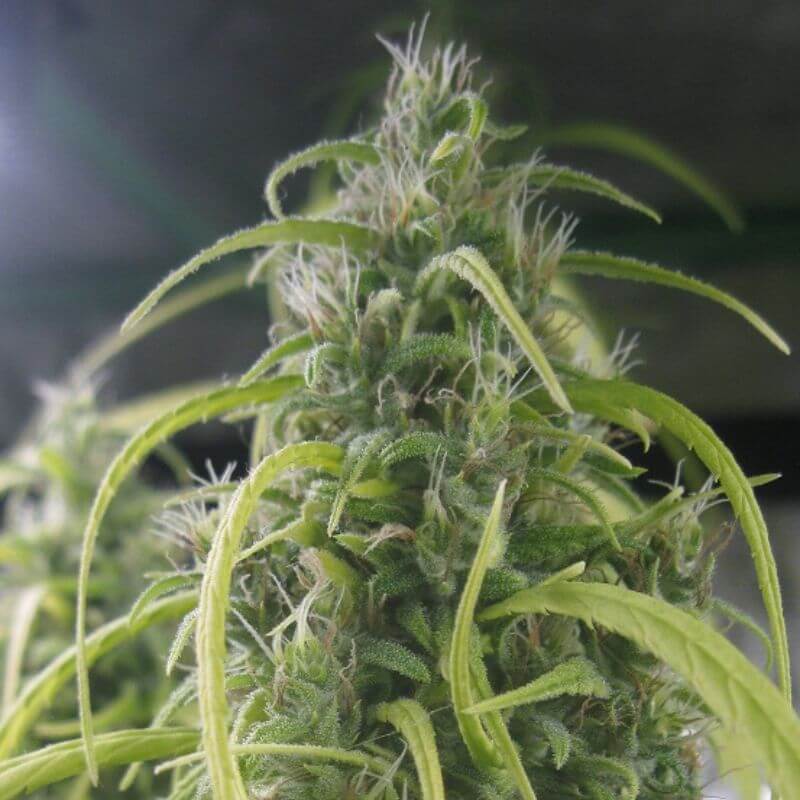
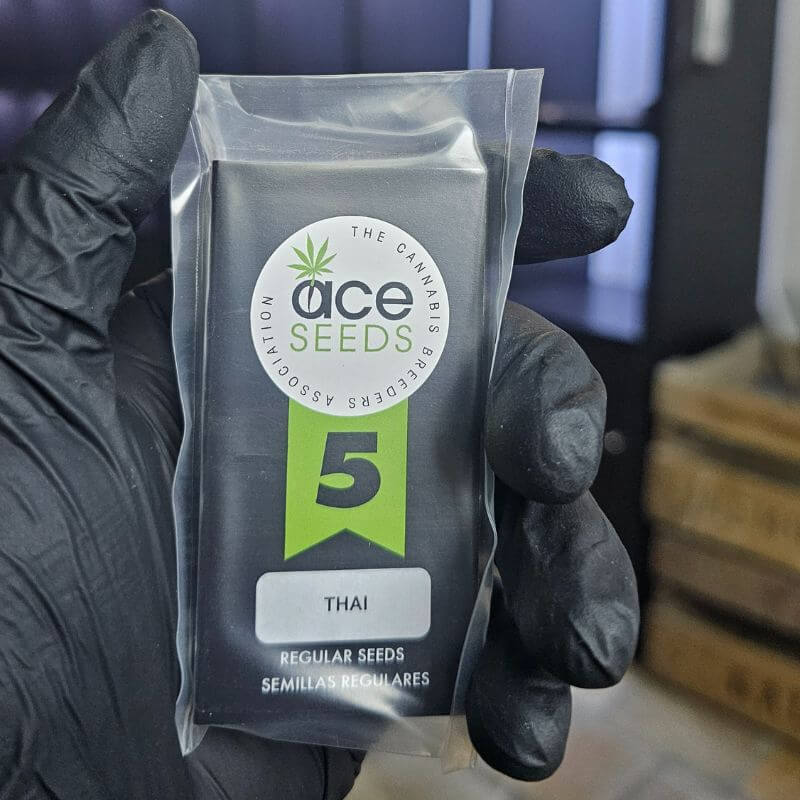
Thai is a traditional pure sativa from Chiang Mai in Thailand’s Golden Triangle (landrace P3–P5), reproduced through preservation work to rescue expressions emblematic of classic Thai sativas. As a tropical sativa it flowers long (3–4 months) via successive reflowerings, with most plants staying green to the end (occasional reddish expressions); a 10–15% subset is more compact, robust, and productive, finishing faster (~3 months) with denser flowers and better indoor adaptability, while the longest-flowering plants (≈4 months) show the most interesting terpenes and effects with spikier floral structures. Structure is generally tall, slender, elegant, with pale, narrow leaves; thin, very flexible stems that withstand heavy downpours; long internodes; and strong lateral branching under high light. Indoor flowering is 12–16 weeks; outdoor finishing is end of November/December; latitude range 0°–37°. Yield per m² is rated average-high. Chemotype: high THC (10–15%) with zero CBD; CBG ~0.41%. Terpene profile: high β-myrcene (~1/3) and terpinolene (~1/3), with the remaining third split among β-pinene, trans-ocimene, α-pinene, and limonene; sesquiterpene β-caryophyllene only. Three aromatic groups occur: (A) fresh lemon-lime, wood, spices; (B) sweet, creamy, perfumed, floral, musky; (C) strawberry (≈5–10%). Effects are very cerebral, energetic and euphoric with clean comedown; can range from positive/pleasant/revitalising to more euphoric/nervous, even psychedelic or introspective; tolerance limits are very high. The line is described as sexually stable with rare problematic hermaphroditism. Indoors it is mainly recommended for extreme sativa lovers, breeding projects, or seed production; use 11/13 (light/dark) to boost flowering and prevent reflowering/excess stretch, optionally reducing to 10/14 in second half to favor full maturation; highly suited to SCROG, horizontal, or network growing due to excellent lateral development and vigorous response to pruning. Outdoors it requires tropical/subtropical climates for full potential but can grow within 20°–37° latitudes (warm, coastal climates recommended); greenhouse use is helpful for correct ripening in non-tropical areas. Nutrient needs are low, especially nitrogen; for outdoors, use a rich organic base (e.g., guano, worm castings), full sun, and minimal fertilizers/stimulators. Resistance is very high to humidity and botrytis-type fungi; ratings include spider mites (average-low), mildew (average-high), botrytis (very high), white fly (average-high), cold (average), and heat (high).