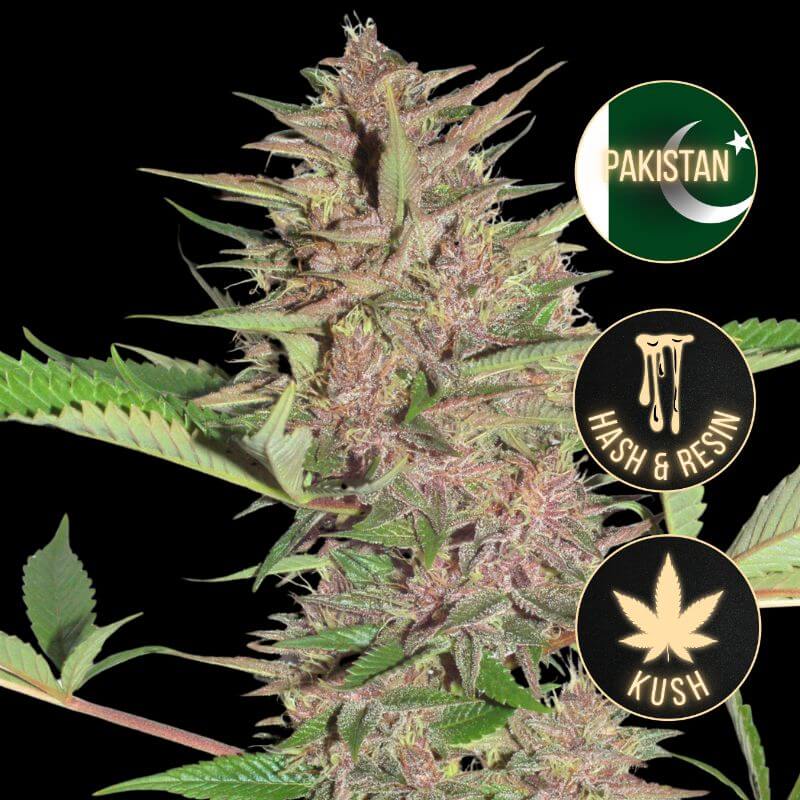
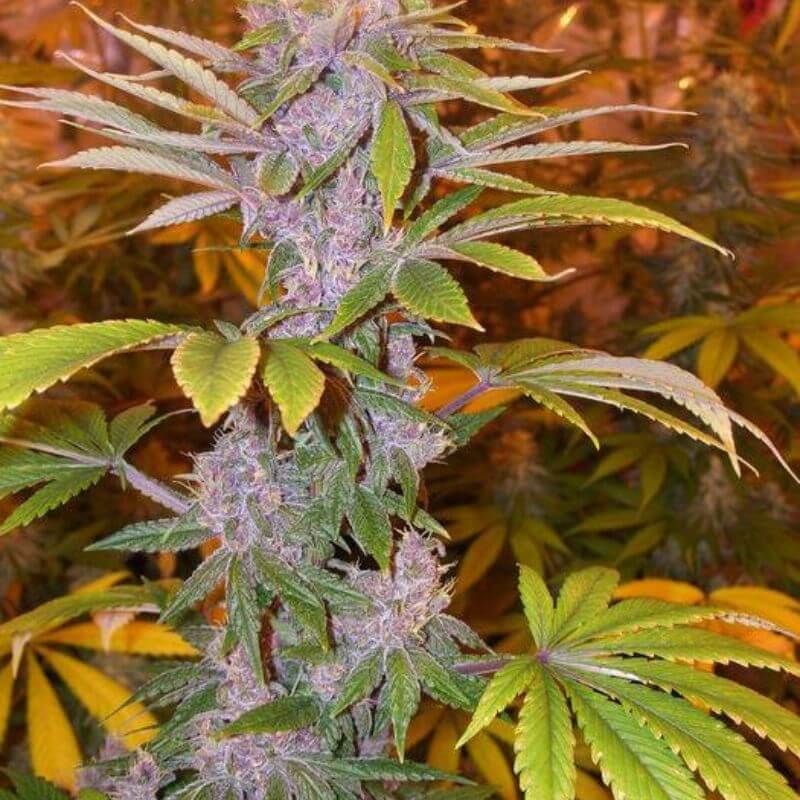
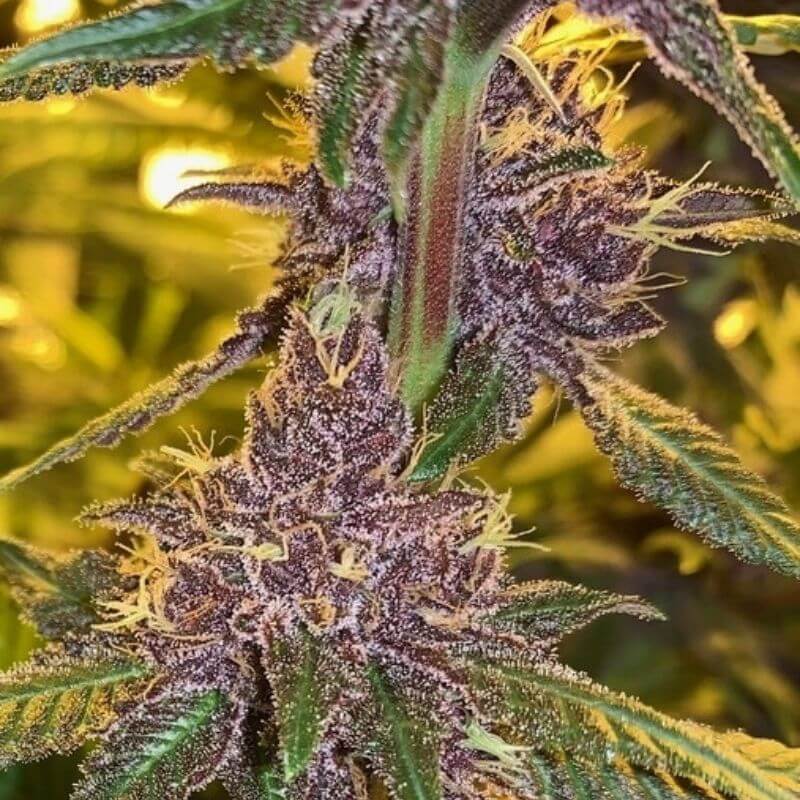
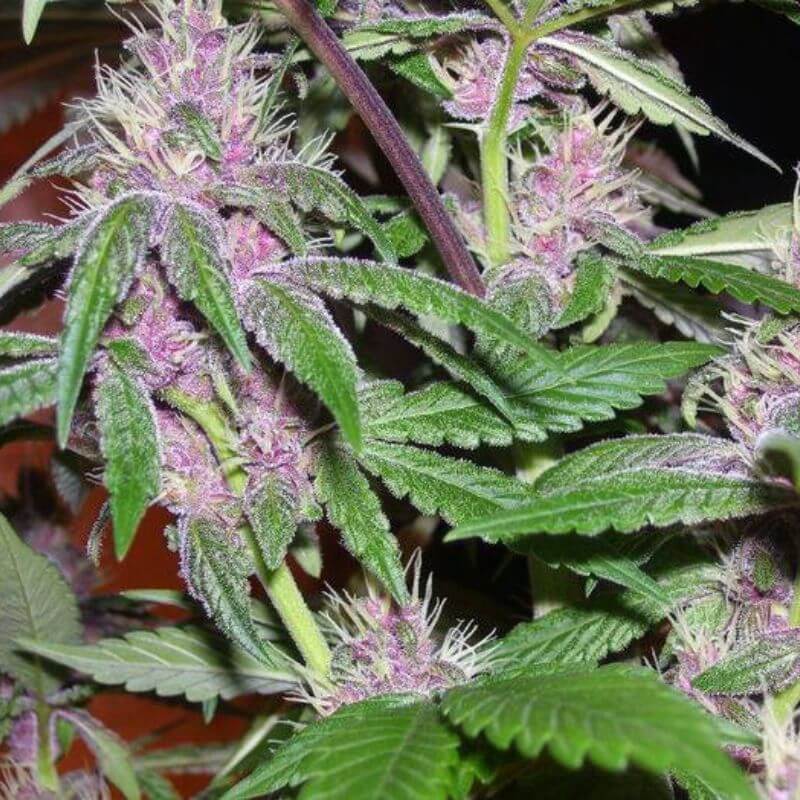
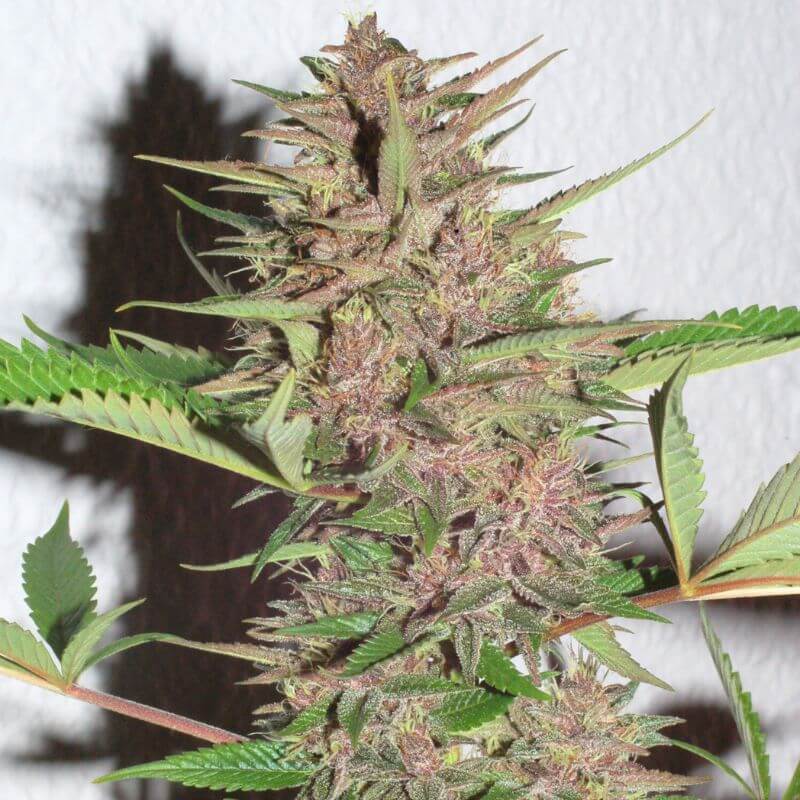
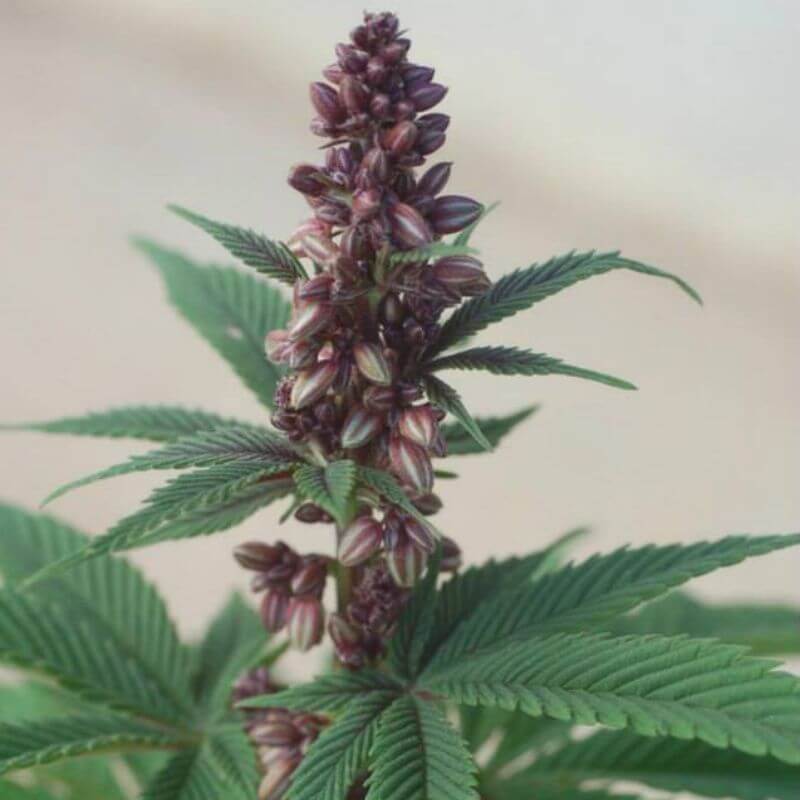
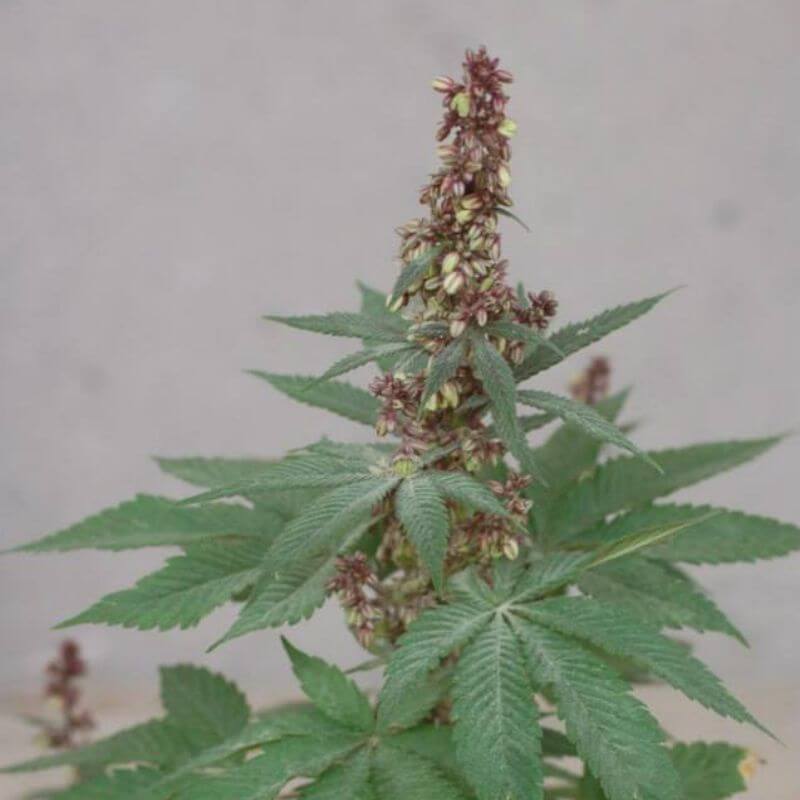
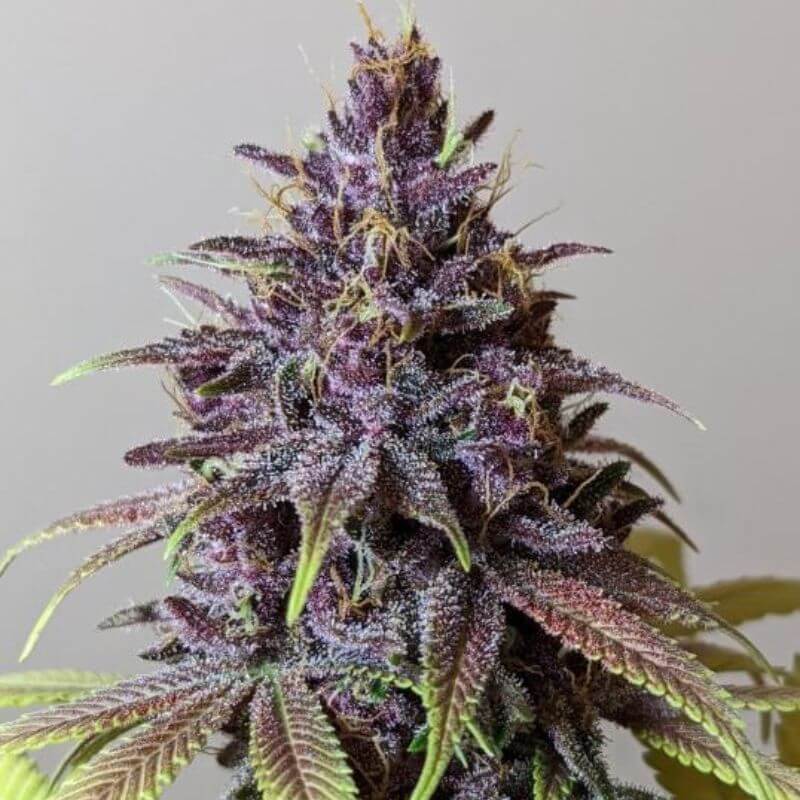
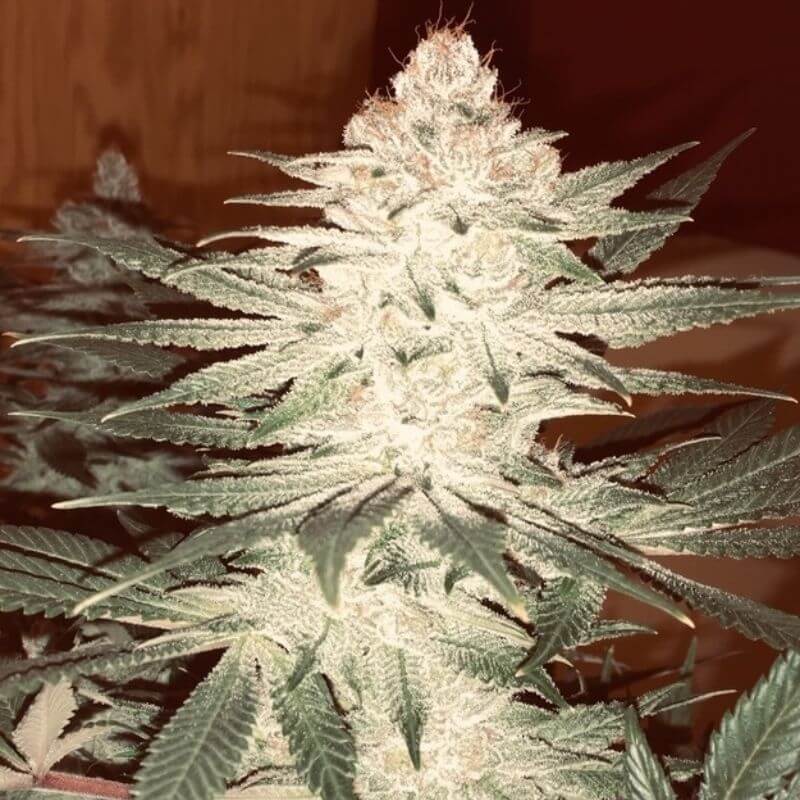
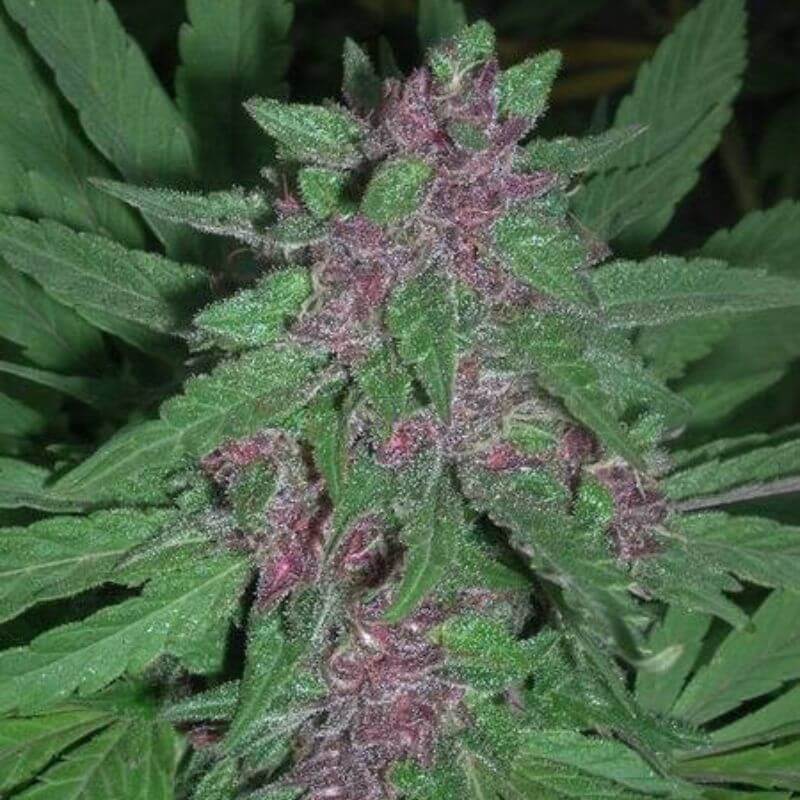
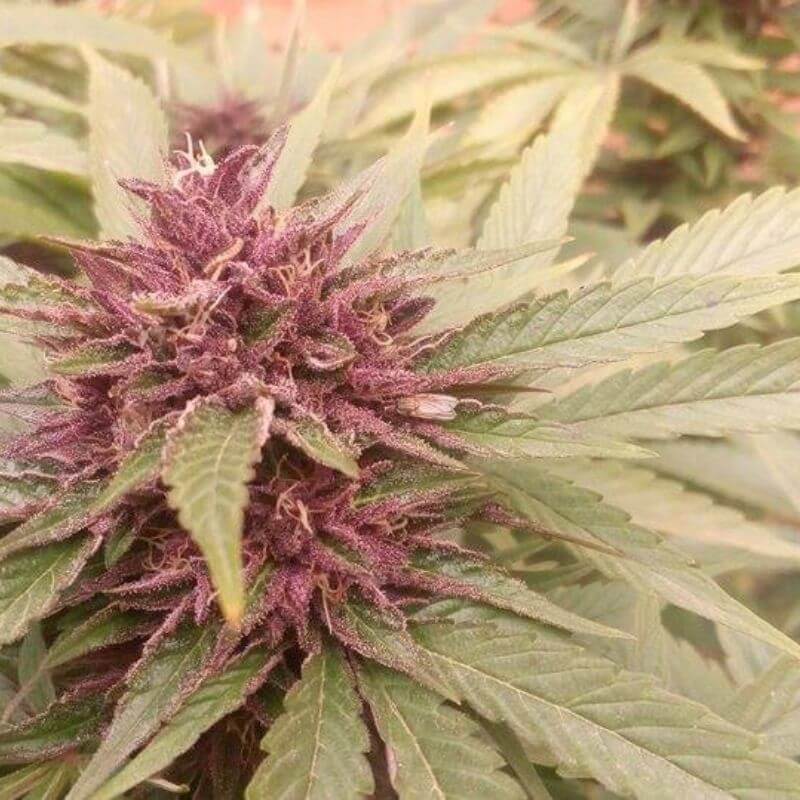
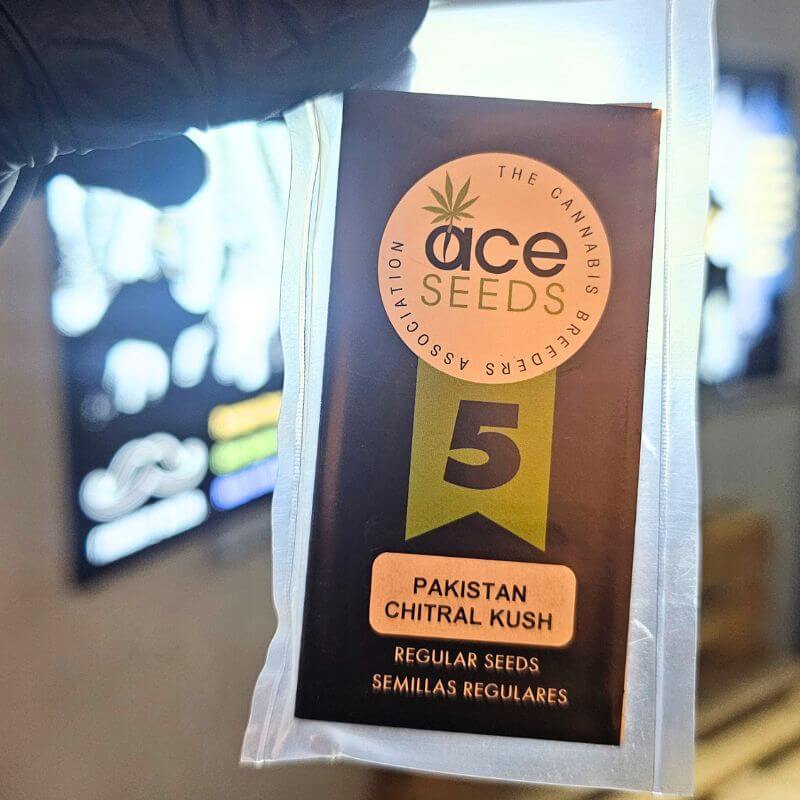
Pakistan Chitral Kush from ACE Seeds is a 100% indica landrace from the Chitral region in the Pakistani Hindu Kush, originally bred by Cannabiogen since the mid-1990s. It is famous for producing some of the best traditional Pakistani hashish and is widely appreciated for its resin production, colorful phenotypes, and unique aroma. The cultivar displays two main phenotypes: a green one and a more colorful one with vivid purple and reddish hues. Both are highly adaptable, easy to grow, and deliver short flowering times with abundant resin and a pleasant, relaxing hash plant effect. THC content is 15–18%, with 0.07% CBD and 0.16% CBG. The terpene profile features very high geraniol and α-humulene, moderate terpinolene, β-caryophyllene, and nerolidol, along with smaller amounts of limonene, β-pinene, β-myrcene, and others. The bouquet is sweet and rounded, with coffee, caramel, citrus, cherry, grape, and forest fruit (strawberry and blackberry) chewing gum notes. Indoors, it flowers in 8–9 weeks; outdoors, it finishes by late September and can grow successfully up to 50° latitude in humid, dry, warm, or cold climates, including Northern and Eastern Europe. The plant shows average/short internode length, wide leaves, and columnar indica growth that is less robust than Afghani indicas but equally resinous. It exhibits high resistance to mildew, botrytis, white fly, cold, and heat, and average-high resistance to spider mites. Pakistan Chitral Kush performs well indoors under an 18/6 vegetative and 12/12 flowering cycle and requires only moderate nutrients throughout the cycle. Genetic analysis confirms its unique genotype of moderate variability, related only to other PCK samples and the Malawi × PCK hybrid. When outcrossed, it transmits strong resistance traits, shortens flowering times, and contributes striking colors and forest fruit terpenes to its progeny. Cultural Utilization: traditionally recognized in Pakistan’s Chitral region as a prime source of high-quality hashish, valued for its aroma, resin production, and resistance, this cultivar represents a cultural cornerstone of Himalayan indica genetics.