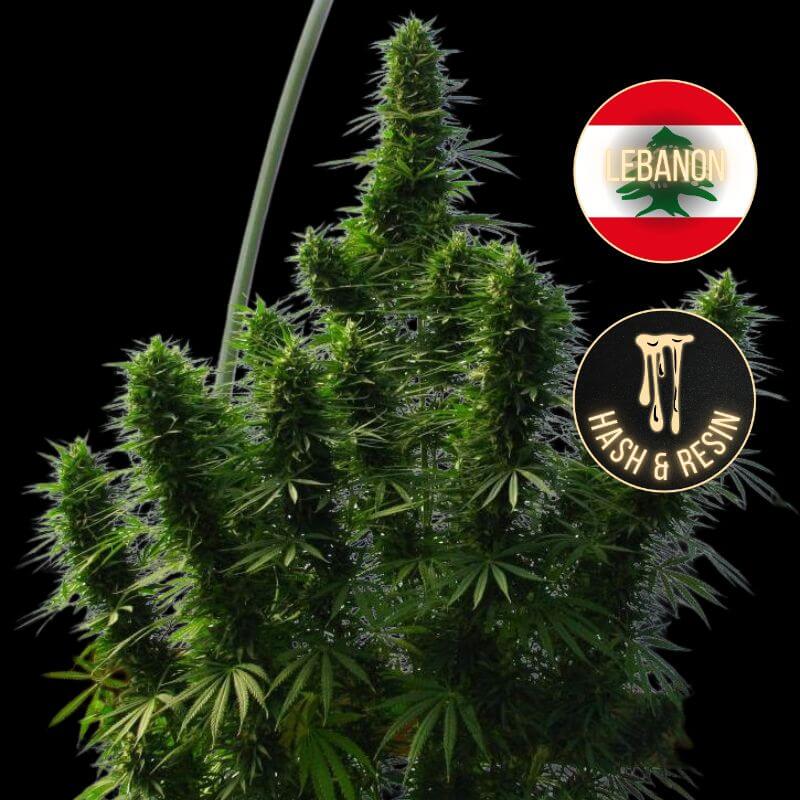
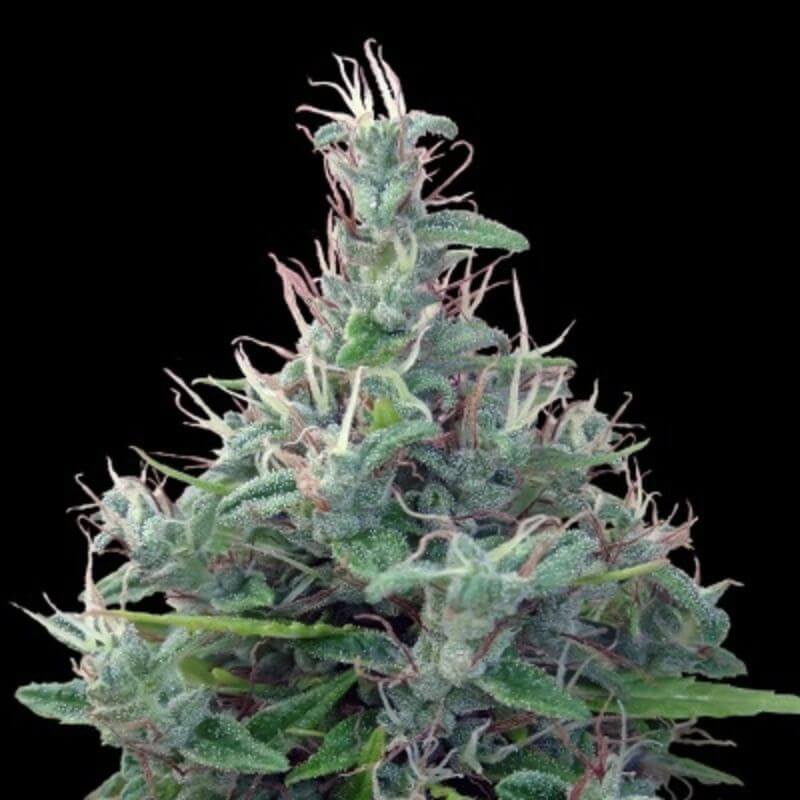
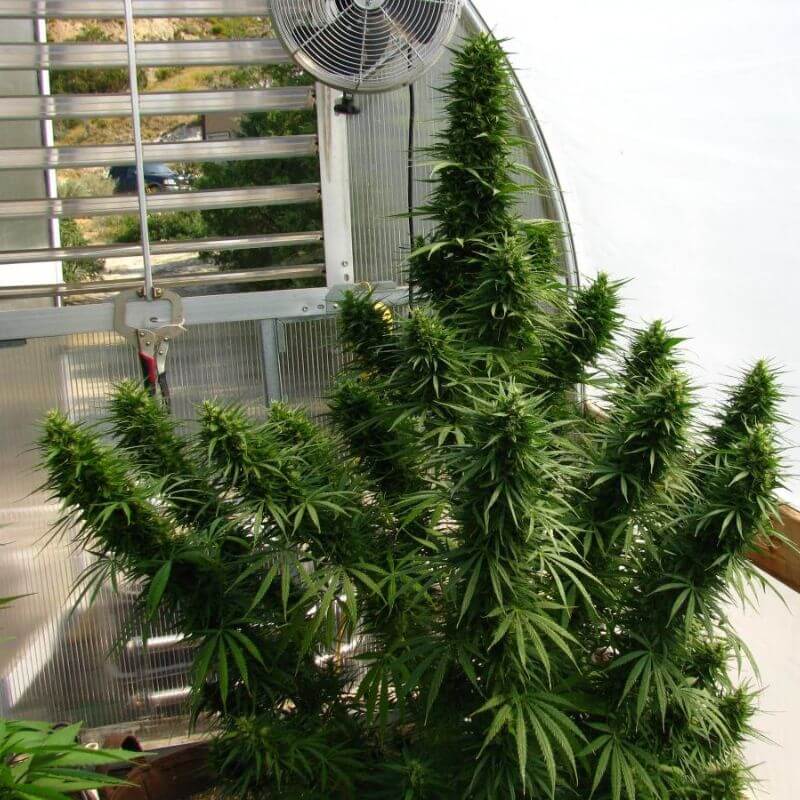
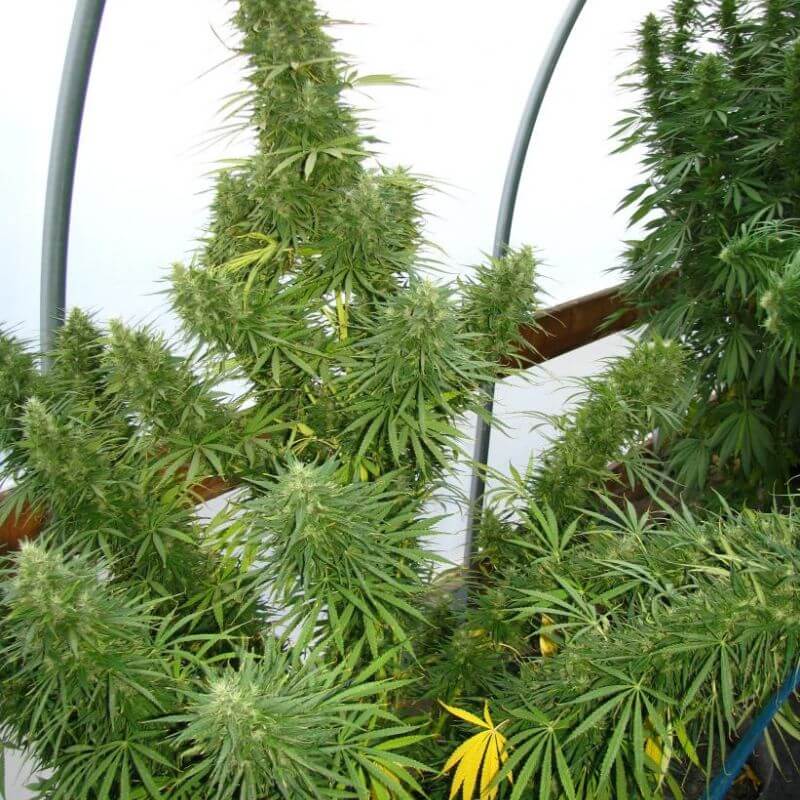
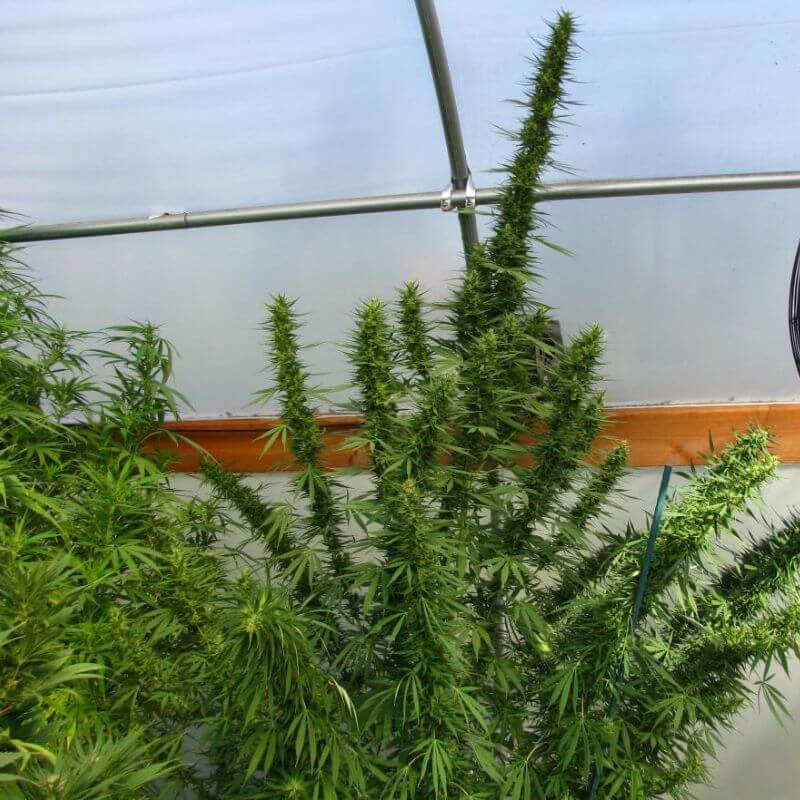
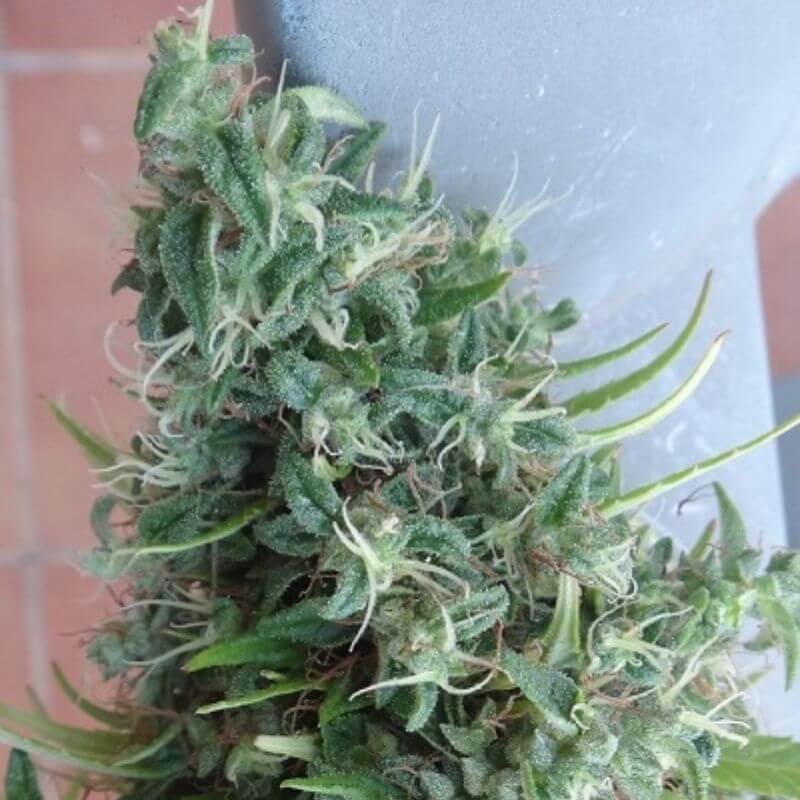
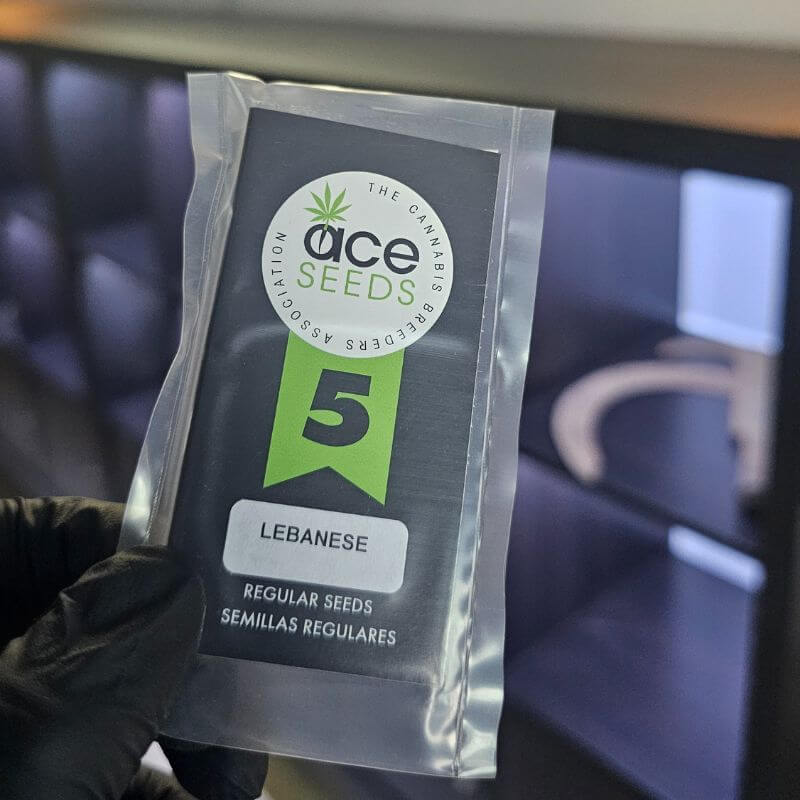
Lebanese by ACE Seeds is a 100% sativa landrace (P4) originating from Lebanon, renowned worldwide for producing the famous red and blonde Lebanese hash. After over a decade of breeding and selection, this cultivar is offered as a pure, traditional hash plant bred for hot and arid climates, demonstrating excellent resistance to drought and high temperatures. It is a vigorous, well-branched plant that matures early due to its semi-autoflowering tendencies, beginning to flower after about six weeks of life and completing flowering in 9–11 weeks indoors or by late September to early October outdoors. The structure starts robust with broad leaves before developing into a medium-sized sativa with thin leaves and strong branching. THC levels range from 0.5–8%, CBD from 6–16%, and CBG up to 0.2%, giving it balanced therapeutic potential. The terpene profile is complex, dominated by high terpinolene and α-pinene, with moderate β-pinene and limonene, variable β-myrcene, and smaller amounts of linalool and trans-ocimene; sesquiterpenes include β-caryophyllene (75–100%) and variable α-humulene (0–25%). Aromas are sweet and floral in bloom, turning citric and mango-like during curing, while smoke evokes the classic ‘blonde hash’ scent reminiscent of Moroccan hash.The high is clean, cheerful, and smooth, not too long-lasting, and notably medicinal due to its high CBD content. Outdoors it thrives in hot, dry climates but also performs excellently in northern, cooler, or wetter regions up to 50° latitude. Indoors it can be grown easily with 18/6 for vegetative growth, 14/10 during early flowering, and 12/12 for final maturation; long photoperiods (20/4 or higher) are recommended for maintaining mother plants due to semi-autoflowering behavior. Resistance ratings are average-high for spider mites, mildew, white fly, and cold; average for botrytis; and very high for heat. It responds best to moderate nutrient levels, with slightly elevated PK during early to mid-flowering, and should not be given flowering stimulators to avoid hermaphroditic risks. Cultural Utilization: traditionally cultivated in Lebanon for centuries to produce the renowned Lebanese red and blonde hashish, this landrace represents one of the world’s most historically significant hash-producing cannabis lines, celebrated for its aroma, balanced cannabinoid profile, and resilience.