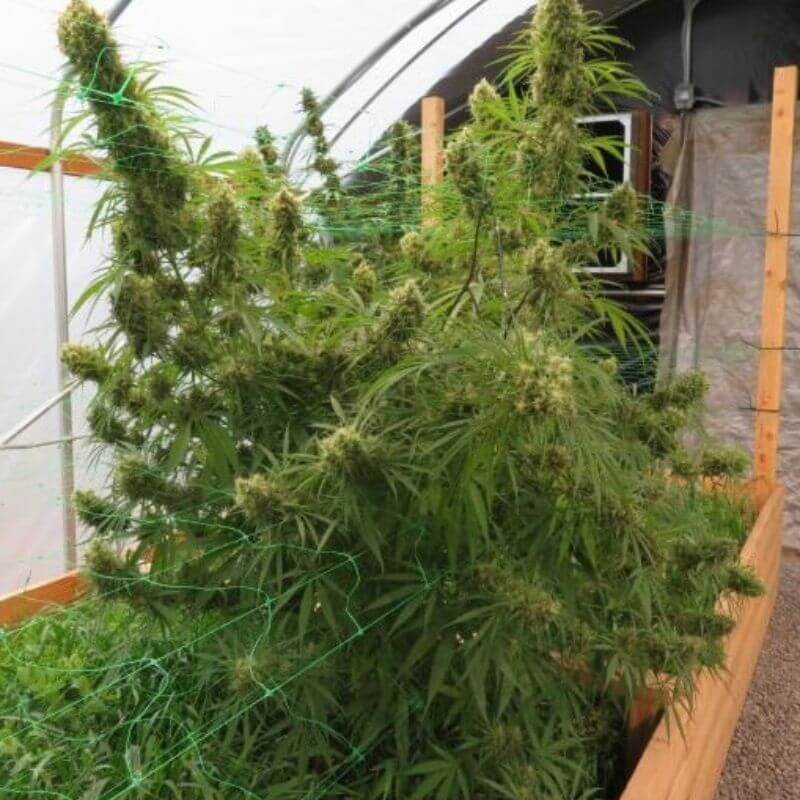
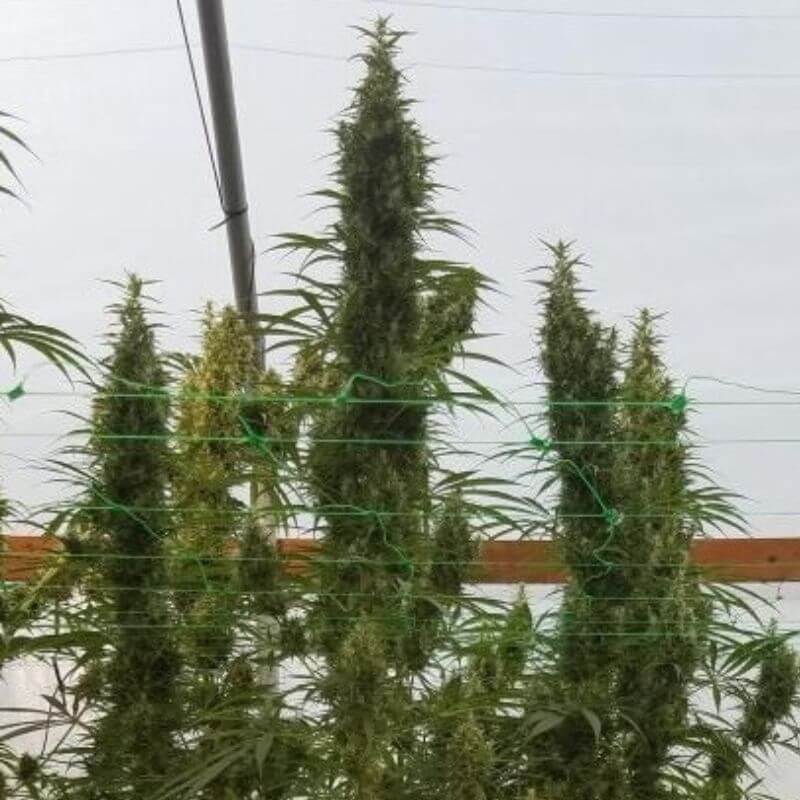
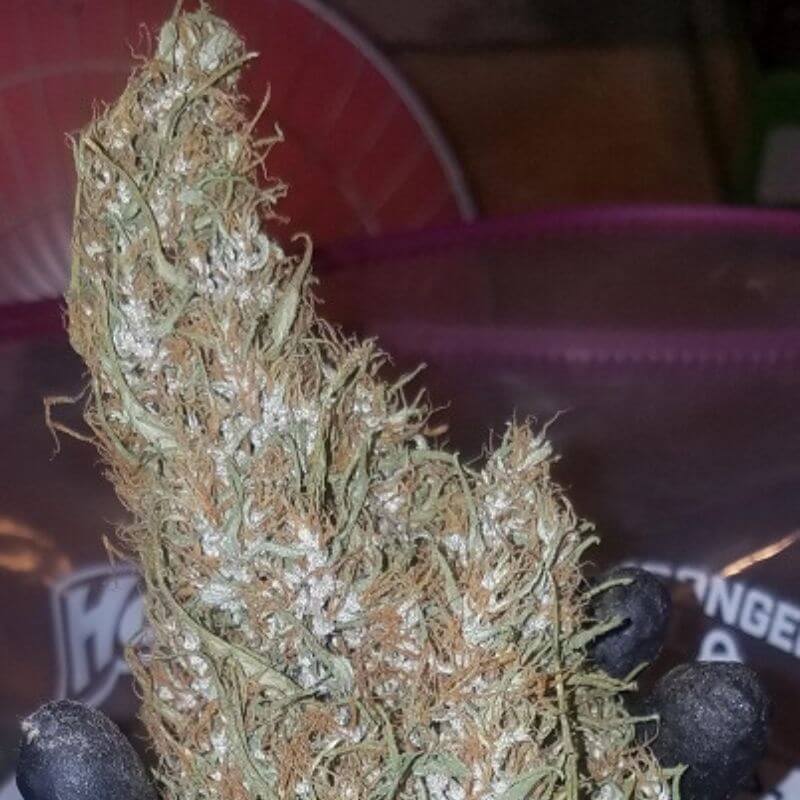
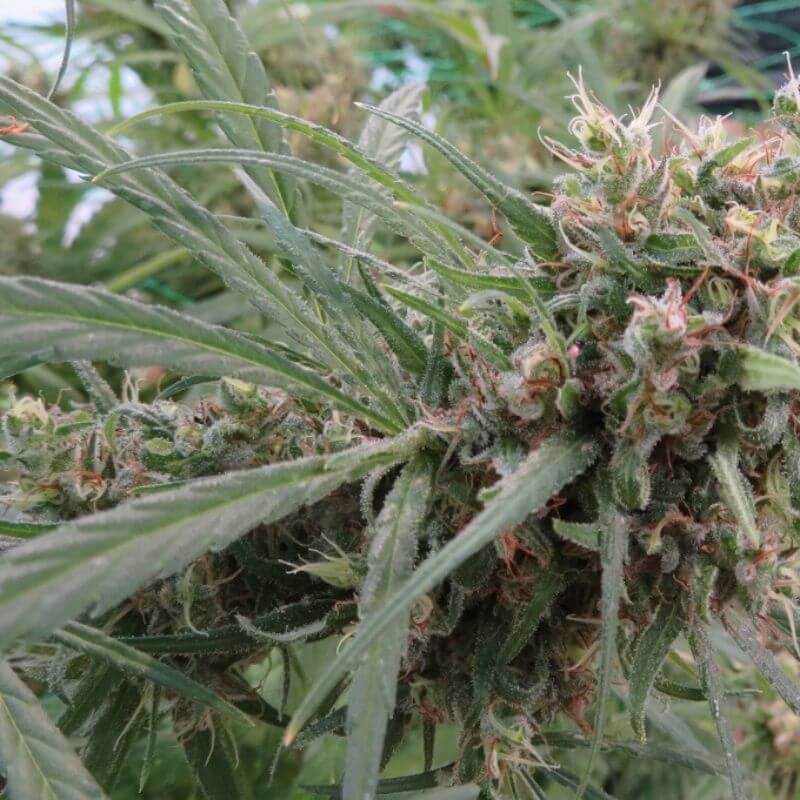
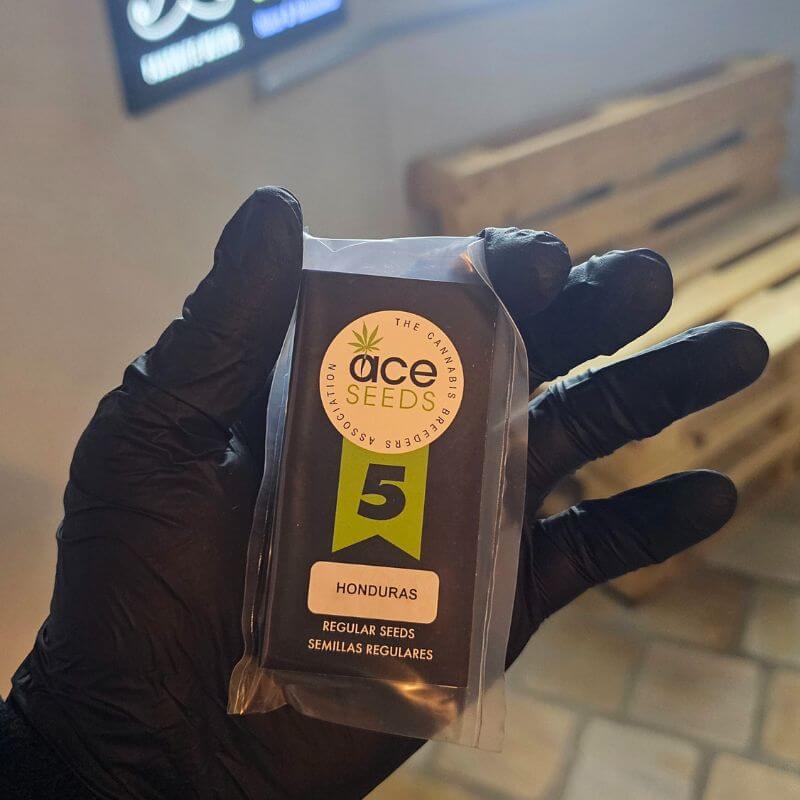
Honduras is a Central American pure sativa landrace (P2) preserved by ACE Seeds in 2015, described as a classical tropical sativa with huge yield, high vigor, a high flower/leaf ratio, and excellent resistance to adverse warm, humid conditions (rains and fungus). Its growth structure, flowering time, flower distribution, and overall appearance recall old long-flowering, high-yielding lowland Colombians, while the effect and terpenes are closer to classic Mexican sativas with clean, happy, positive effects and a stimulant component akin to the most exciting and nervous African sativas. Offered in regular format and 100% sativa, it flowers indoors in 13–14 weeks and finishes outdoors around mid-November; latitude range is 0°–43°. The chemotype is listed at THC 11–18%, CBD up to 0.06%, and CBG up to 1%. The terpene profile is complex: very high terpinolene and high β-myrcene, variable high α-pinene, moderate trans-ocimene with variable moderate β-pinene, and smaller amounts of cedrol, limonene, linalool, trans-phytol, α-phellandrene, α-terpineol, α-terpinene, γ-terpinene, and squalene; sesquiterpenes include high β-caryophyllene with variable β-/trans-nerolidol, α-humulene, and guaiol. Structure is tall, flexible, strongly branched, with medium/tall internodes. The bouquet is floral, citric, geranium, musk, woody, and spicy. Effects are clean, energetic, “feel-good,” moderate in strength and duration, without ceiling, body tiredness, or hangover; it’s noted as excellent for work, music, outdoor activities, and socializing, with cautions that it is not recommended for anxiety, insomnia, heart problems, or Parkinson’s. Indoors it requires strong light and space; an 11/13 (light/dark) photoperiod is recommended to boost flowering and prevent reflowering or excessive early stretch. It is very suitable for SOG (great main-cola yield) and for SCROG, horizontal, or network growing due to excellent lateral branch yield and vigorous response to pruning. Outdoors it thrives in tropical/subtropical climates and also performs very well in warm coastal regions with mild autumns up to ~43° latitude. Nutrient guidance: soft NPK during growth, increasing PK from the 3rd week of flowering; avoid flowering stimulators to reduce hermaphroditic risk. Resistance ratings are spider mites (average), mildew (average-high), botrytis (high), white fly (average-high), cold (average-high), and heat (high). Genetic analyses describe a unique and rare genotype of moderate genetic variability, suitable for creating very vigorous, high-yielding sativa hybrids with clean, energetic effects; when properly grown, yields are huge both indoors and outdoors.